Try-catch blocks everywhere but you still do not know how things can fail.
Typed Errors
- Typed errors in function signatures
- Short-circuit or collect failures
- Automatic retry with backoff
Build production-ready systems your team can ship, customers can depend on, and AI agents can work with.
// In production at





Inspired by Kit Langton's Visual Effect
// Effect in the real world
Kit Langton shows what it takes to migrate a large TypeScript codebase to Effect.
Watch the talk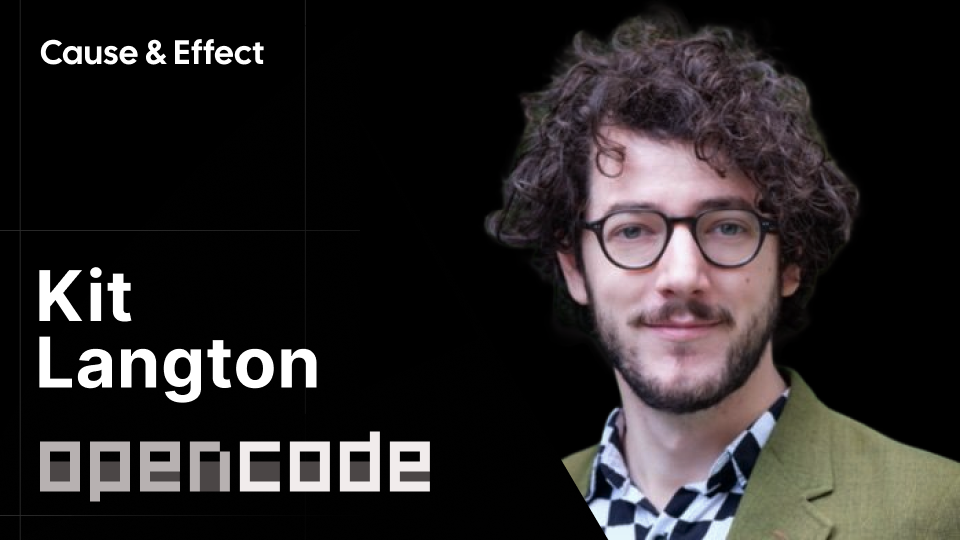
Building a real-time voice AI orchestration layer that powers personalized conversations with celebrity instructors like Gordon Ramsay and Mark Cuban.
Watch the talk
Louis Vichy on how OpenRouter built their internal tooling and infrastructure with Effect.
Watch the talk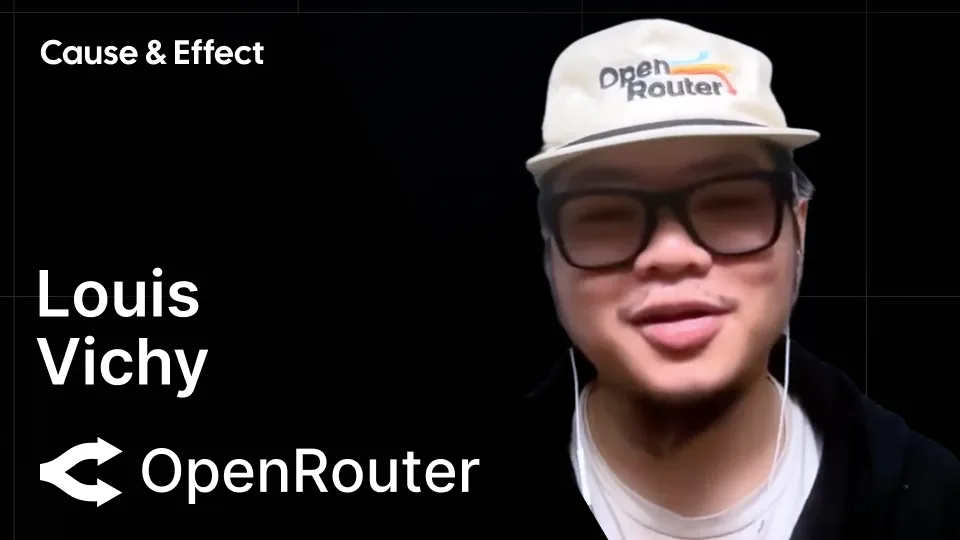
// What Effect Solves
Try-catch blocks everywhere but you still do not know how things can fail.
Another decorator. Another magic string. Another runtime error.
That Promise.all call? One failure and everything crashes.
Network failed? Try again later. But when, and how many times?
No observability. Production is on fire and you do not know why.
Validation logic is duplicated across every layer of your application.
// The Mental Model
The type signature tells you everything. The compiler catches what you miss. No more runtime surprises.
catch (e: unknown) - errors are fully
typed Success
What it returns
Error
What can fail
Requirements
Dependencies needed
// LLMs ❤️ Effect
Effect's declarative patterns and strong type system make it easier for LLMs to generate correct, production-ready code.
Quick start LLM guidePredictable structure: every operation follows a declarative pattern, no guesswork for LLMs.
Typed feedback loop: detailed error traces show what failed, enabling precise self-repair.
Built-in reliability: error handling, supervision, and recovery, production-ready by default.
Rich toolbox: from schema validation to workflows, build in a language LLMs understand.
// Module of the Week
Each module starts as a blog post, gets walked through live at Effect Office Hours, and ends up as a standalone video.
All modulesWe look at idempotency and the dual-write problem, then use idempotency keys and transactions to safely handle messages that arrive more than once.
// Community
"Effect makes doing the hard, tedious, and error-prone tasks that require discipline, easy, natural, first-class."

"Effect tracing is simply magical. Was able to fully integrate with our existing microservice observability stack fairly easily."

"I feel like I'm writing some of the best code in my career using Effect."

"Perhaps the most ergonomic and safe method of Dependency Injection I've ever seen."

"Effect puts you on the path to writing more performant async code by default."

"The real-world impact is tangible: few production bugs, simple testing, and clear code organization."

"The spaghetti code really turns into something that's just very linear and clean."
"I think it's one of the most important libraries being developed today."

"Effect makes doing the hard, tedious, and error-prone tasks that require discipline, easy, natural, first-class."
"Effect tracing is simply magical. Was able to fully integrate with our existing microservice observability stack fairly easily."
"I feel like I'm writing some of the best code in my career using Effect."
"Perhaps the most ergonomic and safe method of Dependency Injection I've ever seen."
"Effect puts you on the path to writing more performant async code by default."
"The real-world impact is tangible: few production bugs, simple testing, and clear code organization."
"The spaghetti code really turns into something that's just very linear and clean."
"I think it's one of the most important libraries being developed today."
"Effect makes doing the hard, tedious, and error-prone tasks that require discipline, easy, natural, first-class."
"Effect tracing is simply magical. Was able to fully integrate with our existing microservice observability stack fairly easily."
"I feel like I'm writing some of the best code in my career using Effect."
"Perhaps the most ergonomic and safe method of Dependency Injection I've ever seen."
"Effect puts you on the path to writing more performant async code by default."
"The real-world impact is tangible: few production bugs, simple testing, and clear code organization."
"The spaghetti code really turns into something that's just very linear and clean."
"I think it's one of the most important libraries being developed today."
// FAQ
Can't find what you're looking for? Our community is always happy to help.
Ask on DiscordEffect's syntax may feel unfamiliar at first: yield*, Effect.gen, TaggedError … But that's because it's doing something TypeScript can't do on its own.
That "weirdness" unlocks:
You can be productive in a few days. Start by replacing await with yield*, everything else follows naturally.
Start small. Pick one problem everyone hates:
Let the quality of the code speak for itself.
Effect prevents the real performance killers:
The runtime overhead is minimal, and the structured approach leads to more efficient code organization and execution.
Effect covers a broader scope than most libraries in the TypeScript ecosystem — combining async control, dependency management, error handling, and observability in one cohesive runtime.
See how it compares to:
Yes! You can start small, wrapping existing async code or APIs in Effect and expanding from there:
// Enter the Effect world
Effect.tryPromise(() => nonEffectAPI())

// Exit back to normal promises
Effect.runPromise(myProgram)
From there, you can progressively refactor leaf modules into Effects, moving upward through your codebase.
import { Effect } from "effect"